Sunday, 21 February 2010

Cabin Fever


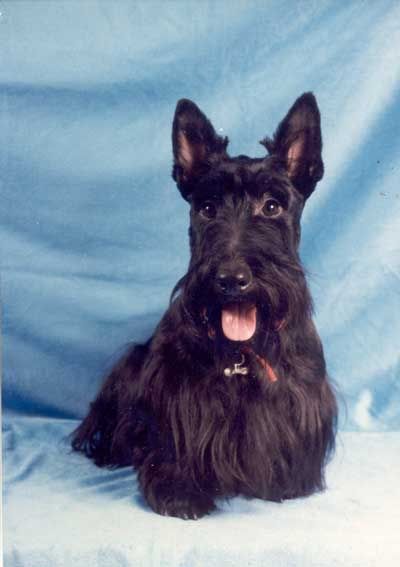
Not all dogs get out and enjoy wintery weather like this guy! So, we thought it might be good to post the following article about cabin fever:

Going inside - and staying there - provides physical protection from the elements, but also opens the door to a mental hazard: boredom. A bored dog can wreak considerable havoc on his household in the form of excessive barking, hyperactivity, and destructiveness. Worse still, if the dog's efforts to relieve his boredom prompt him to partake of poisonous plants or other toxic substances, he'll need immediate veterinary attention, and you are likely to face a significant bill.

To prevent such occurrences, be sure to dog-proof your home; in other words, put any toxic, hazardous, or other forbidden items beyond your dog's reach. Then, find ways to provide your dog with plenty of indoor physical and mental exercise. Here are some activities that you and your dog can do together indoors to help the two of you stay sane:

Fetch:
A rousing game of fetch - particularly if it requires your dog to go up and down some stairs a few times - can give him a good physical work out.

Tug-of-war:
As long as you are not having aggression problems with your dog, a good tug session can siphon off considerable excess cannine energy. Rules of the game: The person needs to start the game, the person needs to end the game, and most of the time the person needs to win the gam.

Hide the toy:
To give your dog a mental workout, try hiding a toy or treat and then directing him to find it. Hold the item for him to see, then place him in another room so he can't see where you hide the object. Once you've hidden the toy, allow him to come out and look for it. When teaching this game, put the toy or treat in plain sight, gradually increase the difficulty until your dog understands how to look for it.


source: The Family Dog

About Scotties

The Scottish Terrier, often called the "Scottie," is best recognized for its distinctive profile and hard, wiry, weather-resistant outer coat in a black, brindle or wheaten color. Its beard, eyebrows, legs and lower body furnishings are traditionally shaggy. Like many breeds in the Terrier Group, Scotties are small yet strong and known as fast, alert and playful dogs. The Scottish Terrier is the only breed of dog that has lived in the White House three times, with Presidents Roosevelt and George W. Bush.

A Look Back
Naturally a "digger" at heart, the Scottie was originally bred to hunt and kill vermin on farms. King James VI, known to adore the breed, is said to be responsible for the rise in popularity in Scotland during his reign. Scotties were introduced to America in the 1890’s and continue to remain a common fixture in American households.

Right Breed for You?
Scotties thrive as house pets and are gentle, loving members of their families. Their spirited natures require obedience training, and they need regular exercise (on leash, as the chase instinct is strong). The Scottie coat requires regular brushing and clipping to maintain the characteristic breed outline.

Love Story


Isn't this sweet?
I do not know the story behind these pictures, but the love is evident.

Found at: Way Cool Pictures

Wednesday, 10 February 2010

25 Ways To Be Healthier

1: Brush twice a day!

2: Dress right for the weather.

3: Visit the dentist regularly.

4: Get plenty of rest.

5: Make sure your hair is dry before going outside..

6: Eat right.

7: Get outside in the sun every once in a while.

8: Always wear a seatbelt.

9: Control your drinking of alcoholic beverages.

10: Smile! It will make you feel better.

11: Don't over indulge yourself.

12: Bathe regularly.

13: Read to exercise the brain.

14: Surround yourself with friends.

15: Stay away from too much caffeine.

16: Use the bathroom regularly.

17: Get plenty of exercise.

18: Have your eyes checked regularly.

19: Eat plenty of vegetables.

20: Believe that people will like you for who you are.

21: Forgive and forget.

22: Take plenty of vacations.

23: Celebrate all special occasions.

24: Pick up a hobby.

25: Love your neighbor as yourself.

Now send this to your computer buds to give them a warm fuzzy!

Tuesday, 26 January 2010

About Schnauzers

schnauzers

Good with children--very reliable. If properly trained, the Schnauzer makes a fine pet. The coat needs a good brushing once a week and clipping or stripping 4-6 times a year. Pet dogs are generally clipped, but show dogs must be stripped. This breed is dominant with other dogs and should be socialized extensively both with other dogs and people as a young puppy. Needs a lot of exercise as a puppy to prevent restlessness.

Personality:

Very protective, bold and spirited. Calm, loyal and responsible. Intelligent. A dominant breed that needs an experienced trainer. Responds best to firm, consistent training with a positive attitude and plentiful rewards.

Behavior:

  • Children: Best with well behaved, considerate children.
  • Friendliness: Reserved with strangers.
  • Trainability: Easy to train.
  • Independence: Fairly independent.
  • Dominance: High.
  • Other Pets: Generally good with other pets.
  • Combativeness: Can be dog-aggressive.
  • Noise: Average barker.

Grooming and Physical Needs:

  • Grooming: Daily grooming is best.
  • Trimming & Stripping: Professional trimming or stripping needed.
  • Coat: Wiry coat.
  • Shedding: Very light.
  • Docking: The ears may or may not be cropped, and the tail is customarily docked.
  • Exercise: Vigorous daily exercise needed.
  • Jogging: An excellent jogging companion.
  • Indoors: Fairly active indoors.
  • Outdoor Space: Best with a yard.
  • Climate: Does well in most climates.
  • Owner: Not recommended for novice owners.
  • Longevity: Moderately long lived (12 to 15 years).

The Historical Schnauzer


The Schnauzer is a German breed of great antiquity, which in the 15th and 16th centuries must have been in high favor as a household companion, for his portrait appears in many paintings of the period. Albrecht Durer is known to have owned one for at least 12 years. Rembrandt painted several Schnauzers, and in the 18 century one appears in a canvas of the English painter Sir Joshua Reynolds. At Mechlinburg Germany, in the market place there is a statue of a hunter dating from the 14th century, with a Schnauzer crouching at his feet.


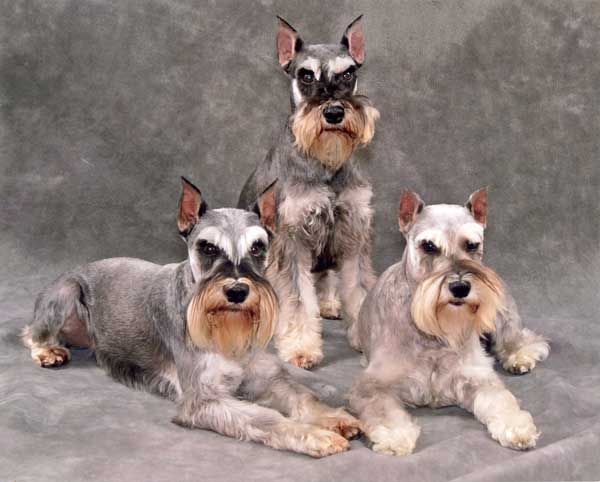
The general impression of the Schnauzer is that of a compact, sinewy, square-built dog, sturdy and alert, with stiff wiry coat and bristling eyebrows and whiskers. His nature combines high-spirited temperament with unusual intelligence and reliability. He occupies the midway position between large breeds and the Toys.

As far as can be determined, the Schnauzer originated in the crossing of black German Poodle and gray wolf spitz upon wirehaired pinscher stock. From the Pinscher element derives the tendency to fawn-colored undercoat, and from the wolf spitz is inherited the typical papper and salt coat color and its harsh wiry character. Solid black specimens of the breed, while fairly commin in Germany, are still rather unusual in this country.


The breed in America was originally classed as a terrier, whereas German breeders have always regarded the Schnauzer prinicipally as a working dog. His principal vocation was that of rat catcher, yard dog, and guard. Before World War I in Germany, fully 90% of the dogs used to guard the carts of farm produce in the market places while the farmers rested themselves and their teams at the inns, were of strong Schnauzer blood. Breeders in the land of their origin hold the Schnauzer second to none for sagacity and fearlessness. Owing to these characteristics, the "dogs with the human brain" (as their owners proudly call them) were much used by the army during the war as dispatch carriers and Red Cross aides; they were also employed in Germany in police work.


In this country and in England, they are used mainly as personal guards and companions, for which purpose their devotion and bravery, coupled with an uncanny perception of approaching danger, renders them most suitable. They are good water dogs and are easily taught to retrieve; and, on at leas one western sheep ranch, Schnauzers have proved themselves the most efficient of various breeds tried as protection for the flocks against marauding coyotes.